Catégorie : publications

  • Article published in American Journal of Sociology: Deference as a strategic behavior

    Since the early days of French cinema, financiers have been mocked for their lack of culture and shortsightedness. Countless films, from Godard’s Le Mépris to more recent pieces, depict financiers as moral enemies attempting to invade the cultural world. When financiers entered the film industry in the mid-1980s to help remedy a shortage of capital, specialized investment funds, called SOFICAs, experienced the very tangible consequences of the stigma attached to their profession in the film world.

    The financial fund managers soon found out that film producers were reluctant to establish relationships with organizations raising money in the market to invest in film. While there was not much they could do to dissipate the deeply-entrenched negative perception of financiers – which still persists today – some of the funds selectively invested in arthouse films. Financing these high-risk low-profit products did not make much economic sense, and in effect hurt the funds’ overall profitability. But, this investment strategy, our study reveals, helped some of the funds convert financial capital into social capital, and eventually gain a foot hold in the film industry. The funds that had more bankers on their board, were not locked in strict financial goals, and were associated with Cannes award-winning films, were more likely to engage in such a strategy.

    In a world of increasing conflict and division, understanding how social actors of different standings, occupation, and status liaise and work together is critical. The work of sociologist Ervin Goffman and his followers have emphasized the role deference plays in accomplishing this goal. Investing in art house movies helped SOFICAs convey appreciation and respect to film producers, smoothing strained relationships. Engaging in deference was a costly strategy that not all funds chose to follow. But it was the price of admission to be paid to be accepted in the movie business.


    get the article Organizational Deference AJS
  • Livre: La Désorganisation du Monde

    Comment comprendre que les solutions proposées par les organisations (entreprises, associations, ONG, etc.), ne durent qu’un temps, lui-même nous paraissant souvent toujours plus bref ? Que les organisations ne sont que temporaires, sans cesse réajustées voire réinventées pour affronter les réalités du politique, de l’économique, du social? Que notre monde vécu semble ne plus avoir de sens?

    Se démarquant des conceptions économiques et sociologiques classiques, cet essaidéveloppe une analyse qui met en relief les rôles et les fonctions des organisations qui peuplent nos univers communs. Il propose donc au travers de notions originales l’esquisse d’une approche renouvelée des organisations. Il débouche également sur l’espoir, concret et accessible, de reprises du monde vécu qui redonne sens à la vie.

    Et si l’organisation était bien le socle d’un avenir plus contributif et donc plus humain…

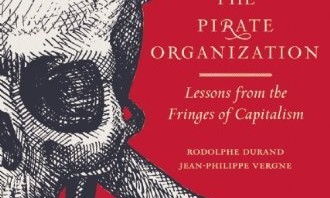
  • The Pirate Organization: Lessons from the Fringes of Capitalism, Harvard Business Review Press

    The Pirate Organization: Lessons from the Fringes of Capitalism, Harvard Business Review Press

    The Pirate Organization: Lessons from the Fringes of Capitalism is out from Harvard Business Review Press!

    When capitalism spread along the trade routes toward the Indies…when radio opened an era of mass communication…when the Internet became part of the global economy…pirates were there. And although most people see pirates as solitary anarchists out to destroy capitalism, it turns out the opposite is true. They are the ones who forge the path. In “The Pirate Organization,” Rodolphe Durand and Jean-Philippe Vergne argue that piracy drives capitalism’s evolution and foreshadows the direction of the economy. First published in French to great critical acclaim and commercial success as “L’Organisation Pirate: Essai sur l’évolution du capitalisme,” this book shows that piracy is not random. It’s predictable, it cannot be separated from capitalism, and it likely will be the source of capitalism’s continuing evolution.

    https://pirateorganization.com/

    Check out the short movie on the book: